
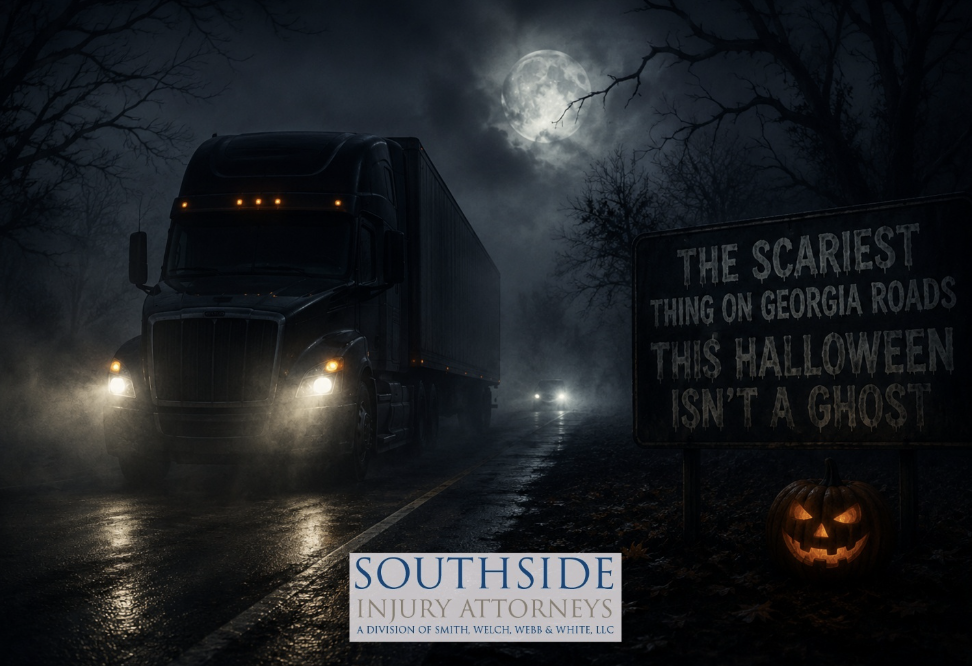
As October arrives in Georgia, many families look forward to cooler temperatures, football games, pumpkin patches, hayrides, and Halloween festivities. While fall is one of the most enjoyable and colorful seasons, it also brings unique hazards to Georgia’s roadways.
Accidents involving commercial trucks or 18-wheelers are serious matters. Longer nights, reduced visibility, changing weather, increased shipping activity, and driver fatigue can create a dangerous combination for truck drivers and passenger vehicle occupants.
Understanding why truck accident risks may increase during Georgia’s fall months can help drivers make safer decisions and recognize potential hazards before a collision occurs.
Why October’s Longer Nights Can Increase Truck Accident Risks
One of the biggest changes drivers experience in October is the gradual loss of daylight. Although daylight saving time does not end until November 1 this year, sunset arrives earlier each evening, meaning more commuters, commercial drivers, and families find themselves traveling in the dark.
According to the Federal Highway Administration, approximately half of all traffic fatalities occur at night, even though only about one-quarter of travel occurs after dark. Reduced visibility, fatigue, and impaired driving can all contribute to the increased danger of nighttime travel.
Night driving poses unique challenges for truck drivers. A fully loaded tractor-trailer can weigh up to 80,000 pounds and requires significantly more distance to stop than a passenger vehicle. When visibility is reduced, truck drivers may have less time to identify hazards, respond to changing traffic conditions, or avoid obstacles on the roadway.
The National Safety Council notes that darkness can impair depth perception, color recognition, and peripheral vision. Headlight glare from oncoming traffic can further reduce a driver’s ability to navigate the roadway safely.
Rural Georgia Roads Present Unique Nighttime Challenges
These risks can be especially concerning on Georgia’s rural highways and two-lane roads, where lighting may be limited and unexpected hazards, such as wildlife, stalled vehicles, or pedestrians, may be harder to see.
Many truck routes across Georgia pass through rural areas with limited street lighting. Drivers traveling after dark may encounter sharp curves, narrow shoulders, agricultural equipment, or wildlife crossings.
The Holiday Rush Begins Earlier Than Many Drivers Realize
While many people associate increased shipping activity with November and December, the holiday freight season often starts much earlier.
Retailers begin moving inventory for Halloween, Thanksgiving, Black Friday, and Christmas months before the holidays actually arrive. As a result, commercial trucks may spend more time on Georgia highways during the fall as they move products among ports, warehouses, distribution centers, and retail stores.
Industry analysts routinely identify September through November as a critical freight-movement period as companies prepare for holiday demand.
Increased truck traffic does not automatically mean more accidents will occur. However, higher traffic volumes can increase congestion, create more merging and lane-change situations, and place greater demands on commercial drivers working under tight delivery schedules.
The Scariest Thing on Georgia Roads This Halloween Might Be Driver Fatigue
Ghosts and haunted houses may be popular in October, but one of the most serious roadway dangers is far more real: driver fatigue.
The Federal Motor Carrier Safety Administration (FMCSA) reports that fatigue can impair reaction time, judgment, attention, and overall driving performance. The agency’s Large Truck Crash Causation Study found that about 13% of commercial motor vehicle drivers involved in crashes were fatigued at the time of the collision.
Commercial drivers often work long hours while managing delivery schedules, traffic, weather, and loading requirements. Although federal regulations are designed to reduce fatigue-related crashes, research by the FMCSA has shown that crash risk can increase as driving hours accumulate.
Fatigue is particularly concerning at night. According to the National Highway Traffic Safety Administration (NHTSA), drowsy-driving crashes occur most frequently between midnight and 6 a.m., and these crashes often involve vehicles leaving the roadway without evidence of braking.
For Georgia motorists traveling after dark, recognizing signs of fatigue, such as drifting between lanes, inconsistent speeds, or delayed reactions, can help them maintain a safer distance from potentially impaired drivers.
Fall Weather Creates Additional Hazards for Large Trucks
October weather in Georgia can vary widely, with cool mornings, fog, rain showers, and damp roads all impacting vehicle traction and stopping distances. A significant yet often overlooked hazard is wet leaves, which can pose risks to all vehicles, from passenger cars and motorcycles to large trucks.
Although leaves may seem harmless, a layer of wet, decomposing leaves can reduce traction, especially in the rain. Drivers often compare driving on wet leaves to driving on ice because tires can lose grip when braking, accelerating, or turning.
This loss of traction can be especially problematic for commercial trucks, which require substantially longer stopping distances because of their size and weight.
When a tractor-trailer encounters reduced traction on wet pavement or leaf-covered roads, the risk of skidding, jackknifing, or rear-end collisions may increase. Drivers following large trucks should maintain a greater following distance in fall weather and avoid sudden braking whenever possible.
Visibility, Fatigue, and Road Conditions: A Dangerous Combination
Each of these seasonal factors poses risks on its own. However, the greatest danger may arise when multiple hazards overlap.
Consider a truck driver operating on a rural highway in Butts County, Georgia, after sunset on a rainy October evening. Visibility may already be reduced by darkness. Wet leaves may reduce roadway traction. Driver fatigue may be increasing after a long shift. Increased freight traffic may contribute to congestion and delivery pressures.
When these conditions occur together, drivers may have less time to recognize and respond to hazards.
Why Having an Experienced Georgia Truck Accident Attorney Matters
Truck accident cases in Georgia are often more complex than typical car accident claims. Determining liability may require a thorough investigation because responsibility can potentially extend beyond the truck driver to the trucking company, a cargo-loading company, a maintenance provider, or even the manufacturer of a defective vehicle part.
An experienced Georgia truck accident attorney can investigate the circumstances of a collision, identify potentially liable parties, preserve critical evidence, and build a case prepared for trial when appropriate.
Having an attorney with courtroom experience may be particularly valuable when liability is disputed or multiple parties may be involved.
Staying Safe Around Commercial Trucks This Fall
Georgia drivers can take several steps to reduce their risk of being involved in a truck accident during the fall season:
- Increase following distance when behind commercial trucks.
- Avoid lingering in truck blind spots.
- Exercise extra caution on wet or leaf-covered roadways.
- Reduce speed during nighttime driving.
- Stay alert for signs of fatigued or impaired driving.
- Use headlights appropriately and ensure they are in proper working order.
- Allow extra stopping distance in rain, fog, or reduced-visibility conditions.
- Remain attentive in rural areas where wildlife crossings and unlit roadways are prevalent.
A little extra caution in October can go a long way toward preventing serious collisions.
Final Thoughts
October’s cooler temperatures and seasonal activities make it a favorite time of year for many Georgia families. However, the same seasonal changes that make fall enjoyable can also create additional hazards on the road.
Longer nights, increased freight traffic, driver fatigue, wet leaves, changing weather, and reduced visibility can all contribute to challenging driving conditions throughout the fall season.
If you or a loved one has been injured in a commercial truck accident, call 866-982-5295 today for a free consultation and to discuss your case with an experienced truck accident lawyer in Georgia.
¹ Federal Highway Administration. (2025, September 26). Nighttime visibility overview. U.S. Department of Transportation.
https://highways.dot.gov/safety/other/visibility/nighttime-visibility-overview. Accessed July 2026.
² National Safety Council. (n.d.). Driving at night. https://www.nsc.org/road/safety-topics/driving-at-night. Accessed July 2026.
³ Reuters. (2025, September 29). U.S. holiday package deliveries to rise 5% from 2024, ShipMatrix forecasts.
https://www.reuters.com/business/retail-consumer/us-holiday-package-deliveries-rise-5-2024-shipmatrix-forecasts-2025-09-29/.
Accessed July 2026.
₄ Federal Motor Carrier Safety Administration. (2015, February 11). CMV driving tips: Driver fatigue. U.S. Department of
Transportation. https://www.fmcsa.dot.gov/safety/driver-safety/cmv-driving-tips-driver-fatigue. Accessed July 2026.
₅ National Highway Traffic Safety Administration – Drowsy Driving. (n.d.). Drowsy driving. U.S. Department of Transportation.
https://www.nhtsa.gov/risky-driving/drowsy-driving. Accessed July 2026.

